Pick a starting style
Choose a familiar starting point. The calculator fills in the recipe ratios for you.
DOUGH PLANNING, MADE EASIER
Use this free online dough calculator to scale bread, sourdough, pizza, focaccia, bagel and Indian flatbread recipes—including roti, chapati, paratha, poori, naan and thepla. Calculate ingredient weights with baker’s percentages.
Make my dough plan ↓Free to use · No account · For home and professional bakers
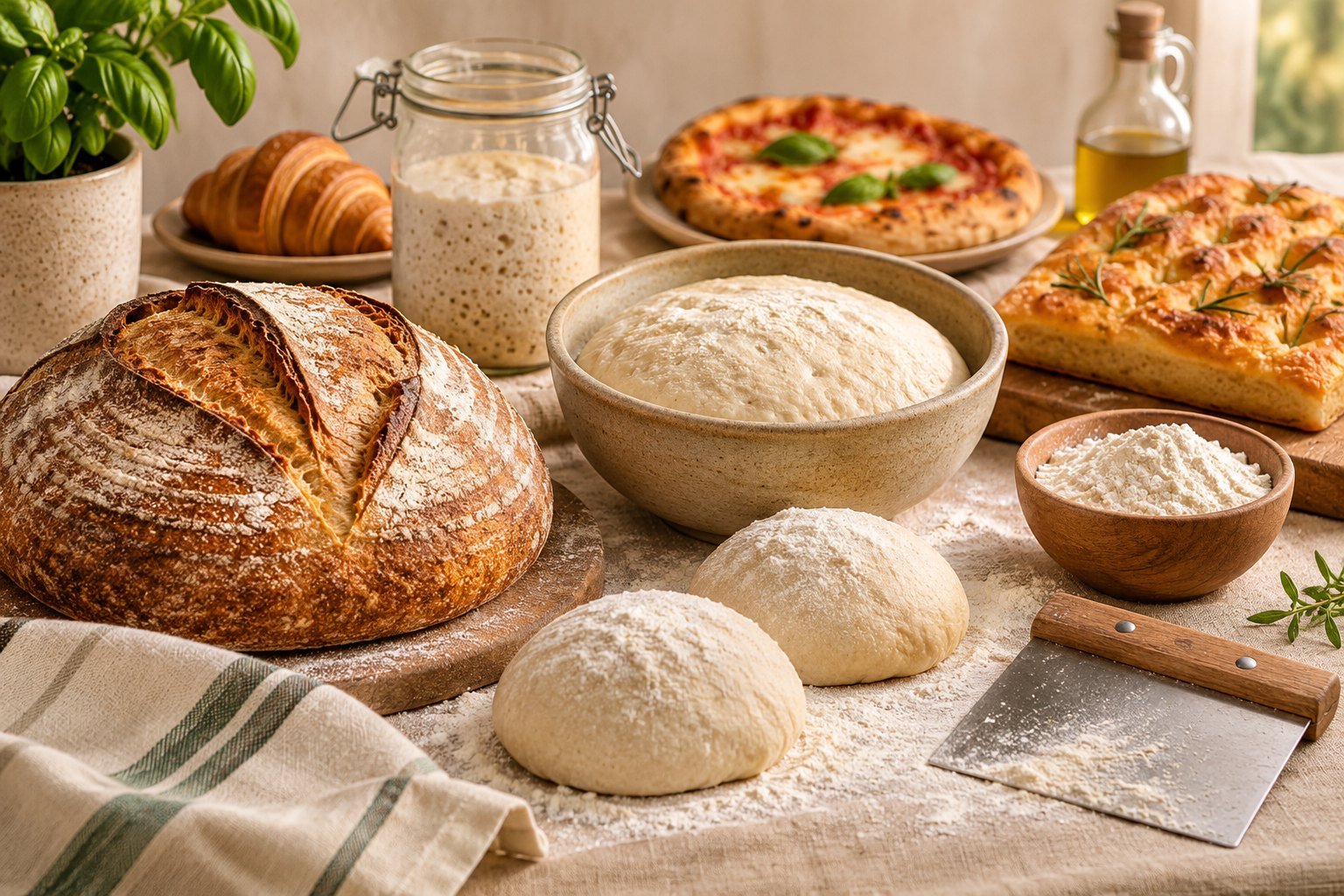
THE UNIVERSAL DOUGH CALCULATOR
Choose a dough profile or create your own formula, set your batch size, and we’ll calculate the ingredient weights.
500 g per portion
20 hours in the fridge · 4 hours at room temperature
Adjust the fermentation schedule in the optional settings.Weights are calculated with baker’s percentages. A kitchen scale gives the most repeatable results.
ONE UNIVERSAL TOOL, MANY WAYS TO BAKE
Start with a familiar profile, then adjust the ingredients to suit your own recipe.
Scale flour, water, salt and yeast for loaves and everyday bread.
Use bread profile → STARTER-BASEDPlan a sourdough batch with a starter percentage and adjustable dough ratios.
Use sourdough profile → PIZZA STYLESScale dough portions and adjust hydration, salt, yeast and other ingredients.
Use pizza profile → HIGHER HYDRATIONStart with a focaccia profile and customize oil, water and batch size.
Use focaccia profile → FIRMER DOUGHSScale bagel portions and adjust the flour-based ingredient percentages.
Use bagel profile → ENRICHED & CUSTOMStart with an enriched-dough profile or create your own formula with custom ingredients.
Use enriched-dough profile → INDIAN FLATBREADSScale dough for roti, chapati, paratha, poori, naan and thepla with adjustable starting ratios.
Explore Indian bread profiles →These are starting profiles inside the Universal Dough Calculator, not separate calculators. You can adjust the percentages to match your own formula.
NO BAKING MATH REQUIRED
Start simple. You can always fine-tune your recipe later.
Choose a familiar starting point. The calculator fills in the recipe ratios for you.
Choose how many portions you need and the dough weight for each one.

Use the scaled ingredient list with your chosen mixing and fermentation method.
A LITTLE DOUGH KNOW-HOW
Hydration is the water compared with flour by weight. For example, 620 g water with 1,000 g flour is 62% hydration. A lower number usually makes a firmer dough; flour type and mixing also change how the dough feels.
Baker’s percentages make recipe scaling easier. Flour is the 100% base. Added water, salt, yeast, oil or fat, sugar, sourdough starter, and custom ingredients are entered as percentages of flour weight. The calculator scales those ingredient weights to the total dough weight you requested. The calculator splits starter into its flour and water contributions, so total flour and true hydration include the starter.
See a baker’s percentage explanation ↗For an example of dough style guidance, see the AVPN Neapolitan pizza recipe and dough-ball weights ↗.
QUICK ANSWERS
Enter the number of portions and the weight you want for each one. The calculator scales each ingredient to that total batch weight while keeping the baker’s percentages in proportion.
Yes. Choose the sourdough profile or set a starter percentage in the optional settings. Starter flour and water are accounted for separately using the starter hydration setting.
Yes. Choose an Indian bread profile such as Roti / Chapati, Paratha, Poori / Puri, Naan or Thepla. The ratios are practical starting points; adjust the water and fat to suit your atta or maida, resting method and family recipe. Frying oil and extra ghee or oil used between paratha layers are not included unless you enter them as ingredients.
Yes. Choose Custom Dough Recipe, adjust the ingredient percentages, and add up to three custom ingredients with their baker’s percentages. The calculation runs in your browser, and your amounts stay on your device unless you copy them yourself.
No. It divides the total time you enter between the fridge and room temperature. Dough temperature, flour, starter or yeast activity, and kitchen conditions all affect fermentation, so use it as a planning note and follow your recipe.
Your dough plan is just a few clicks away.